

Stop Giving Opportunity Youth Unaccredited High School Diplomas
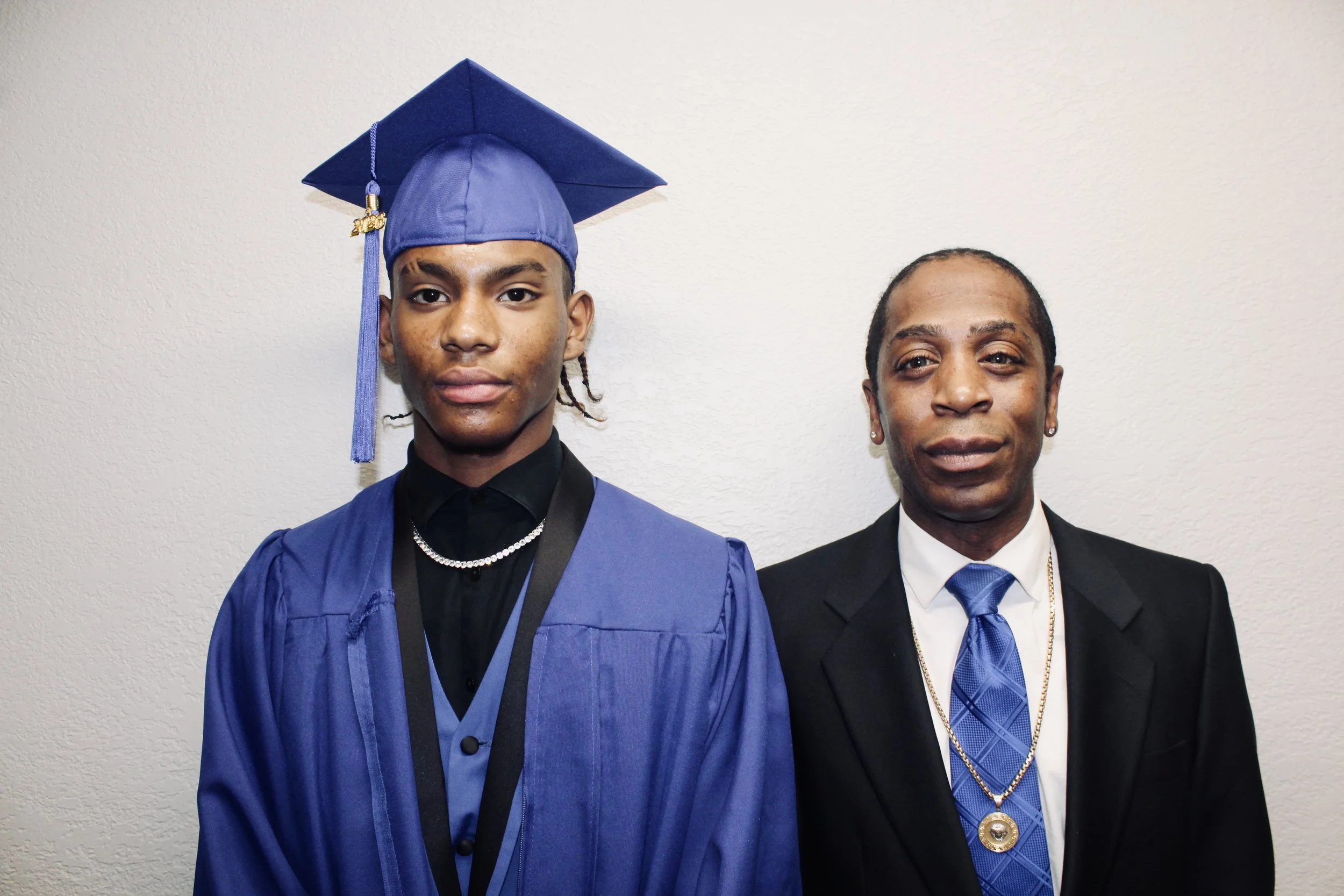
By Juan Ramos, Founder & Executive Director at R3 Generations
For years in the non-profit sector, I watched a heartbreaking cycle unfold.
A young person in foster care, a teenage parent, or a youth involved in the juvenile court system decides to break the cycle. They endure immense personal trauma, overcome monumental life barriers, and put in the late-night work. They cross a graduation stage, hold up a diploma, and believe the door to their future has finally opened.
Then comes the crushing blow.
They walk into a military recruiting office, apply to a community college, or register for a trade certification program—only to be told: "Your diploma isn't recognized. The program lost its accreditation, or it was never accredited in the first place."
In an instant, their hard work is rendered meaningless. They did everything right, and the system failed them twice.
The Unkind Reality of Dropout Recovery
In our early years at R3, before we built our own school, we routinely referred youth who had dropped out to various city programs, paying their tuition whenever funding was available. But as I accompanied our students to register, I was appalled by what I witnessed.
The staff at these programs were often cold, dismissive, and insensitive to the realities these young people were carrying. Students would return to us months later in tears, saying: "They won't give us our transcripts," "They won't provide tutoring," or "They aren't helping us get access to our classes."
Even worse, many of these organizations claimed to be accredited when they were not. They operated with zero accountability, taking advantage of vulnerable youth who simply wanted a second chance.
We realized very quickly that if we wanted our students to succeed, we couldn't just send them back into an unkind system. We had to build a new foundation ourselves.
Designing a Sanctuary: The Support Advocate Model
In partnership with Our Lady of the Lake University, we set out to build a school specifically designed around the realities of opportunity youth. We gathered feedback directly from the young people we served to identify why traditional and alternative programs failed them.
The barriers were obvious:
Lack of Transportation: Students couldn't afford gas, bus passes, or reliable rides to attend in-person classes daily.
Childcare & Family Obligations: Single parents and primary breadwinners couldn't sit in a classroom from 8:00 AM to 3:00 PM while caring for young children or working to keep food on the table.
We knew the program had to be flexible and virtual, but virtual learning alone creates another danger: isolation. How do you mentor, guide, and protect a student when learning happens through a screen?
Our solution was the creation of the Support Advocate.
Support Advocates are not traditional teachers or disciplinarians. Their sole responsibility is wraparound care. They walk alongside the student to ensure their fundamental human needs are met—whether that means delivering emergency food, providing clothing, resolving a crisis, or simply offering a safe space to be heard. We proved that when you surround a student with radical love and practical support, academic progress follows naturally.
The Wall of "NOs" and the Pursuit of Regional Accreditation
When we first launched as the R3 Learning Academy, we operated as an unaccredited home-school program. But I knew in my heart that wasn't good enough. There was still a risk that a university or employer might reject our students' credentials, and I refused to let our youth hold a diploma that carried any shadow of doubt.
We began reaching out to accrediting agencies, and the rejection was immediate.
Door after door was slammed in our face. Bureaucrats and administrators told us: "It's never going to happen because of how Texas law is set up," or "Your model doesn't fit the traditional mold."
When you are fighting for young people who have been told "no" their entire lives, you learn that a "no" from a system just means you need to ask someone higher.
We bypassed minor accrediting bodies and went straight to the Western Association of Schools and Colleges (WASC)—one of the most rigorous regional accrediting agencies in the nation. Regional accreditation is far more demanding than national accreditation, requiring institutional stability, curriculum alignment, and strict operational standards.
WASC welcomed us with open arms, guiding us through a grueling six-month evaluation. We were simultaneously running a school, learning how to meet Texas graduation guidelines, and adapting our entire operation to satisfy WASC standards.
In December 2023, the news arrived: WASC granted us early ratification for regional accreditation.
Even better, the accreditation was made retroactive to the very day our school opened. Every single graduate who had crossed our stage—past, present, and future—was covered by a diploma recognized by every college, trade program, and military branch in the United States.
Sitting in my office today, I look at our official certificate of accreditation hung right below a framed quote that reads: "It always seems impossible until it's done."
Determination Forged in the Fire: Darienique & The 35-Year-Old Father
Systemic disruption isn't measured in policy papers; it is measured in human lives.
I think of Darienique, one of our very first students. She came to us after being severely bullied, physically harmed, and pushed out of her traditional high school while pregnant. She enrolled in our academy and worked relentlessly. When she gave birth, she literally sent us photos and completed coursework from her hospital bed.
Tragically, just one month after her daughter was born, her newborn passed away.
Our staff told her to stop, to rest, and to take all the time she needed to grieve. But Darienique used her schoolwork as an anchor in the storm. She would walk into our center, sit at her desk, cry tears of immense loss, and keep pushing forward through her lessons.
That same year, Darienique walked across our graduation stage in her cap and gown—a living definition of determination for every person in that room.
I also think of a 35-year-old father who enrolled in our adult pathway through a local church partnership. I was personally grading his work, and I sent one of his final essays back for revisions four times. He was deeply frustrated and discouraged, fighting the urge to quit.
On graduation night, he stood on stage and brought his three children up with him. His kids, aged 4 to 15, took the microphone with tears streaming down their faces, telling the crowd how watching their dad refuse to give up had changed their entire family.
Backstage after the ceremony, he walked up to me, looked me in the eye, and said: "Thank you for making me do that essay right. I was frustrated, but I needed you to push me."
NuGenerations Private Schools: The Horizon
As we celebrate seven years of impact and transition our overarching organization to R3 Generations, our academy has officially evolved into NuGenerations Private Schools.
We have graduated over 100 students in San Antonio and recently celebrated our largest Dallas graduation alongside the Dallas Juvenile Probation Office.
Moving forward, we are expanding our model:
The Fast-Track Lifeline: Continuing our rapid-completion pathway for youth in acute crisis who need an immediate credential to enlist, work, or stabilize their lives.
The Year-Round Hybrid Experience: Introducing full, semester-long programming that eliminates the "summer slide" and provides a permanent, structured anchor for foster and justice-involved youth who need long-term stability.
Our youth are not failing because they lack ambition. They are failing because we ask them to navigate a rigid 19th-century educational structure while surviving 21st-century trauma.
It is time to stop offering second-rate options to young people who need the very best. They deserve uncompromised rigor, flexible support, regional accreditation, and absolute dignity.
If we want to close the dropout pipeline once and for all, we must build schools that are as resilient, flexible, and ambitious as the students walking through their doors.