

How We Bridge the Workforce Gap for Opportunity Youth: The R3 Institute Blueprint
Sidelining opportunity youth creates an economic vacuum that illegitimate markets are quick to fill. Discover the workforce development blueprint used by the R3 Institute of Career Pathways to combine paid internships, stackable IBM Microcredentials, and statewide trade pipelines with Southern Careers Institute to launch youth into sustainable careers.
By Juan Ramos, Founder & Executive Director at R3 Generations
Across our nation, millions of young people aged 16 to 24 are disconnected from both school and the workforce. Often referred to as "opportunity youth," these are young people navigating foster care transitions, past involvement in municipal or juvenile courts, or the economic weight of supporting their households.
When a young person gets sidelined by life circumstances, conventional systems often respond with punitive measures or dead-end, low-wage jobs that offer no upward mobility. When legitimate economic ladders are absent, illegitimate markets step in to fill the void.
At R3 Generations, we believe youth are not failing because they lack talent or ambition; they are failing because they are locked out of modern career pipelines.
Through the R3 Institute of Career Pathways, we have developed an actionable, replicable workforce development model that moves opportunity youth out of courtrooms and into sustainable careers. Here is how our job readiness model operates today—and where we are taking it next.
Pillar 1: Remove Economic Friction (The "Earn While You Learn" Runway)
The single greatest failure of traditional job readiness training is expecting youth in crisis to train for free. When a young person must choose between attending an unpaid professional development class or paying rent, survival will always win.
The R3 Institute removes this barrier by paying students to develop professionally.
Through our Youth Employment Mentorship Program (YEMP), we structured our training around real financial security: we pay every participant a competitive wage of $13-$14 an hour for 30 hours a week. We pay them for their classroom training time, their on-site employer hours, and their post-work evaluations.
Our workforce curriculum is broken into three intentional phases:
Phase 1: Pre-Work Experience: Intensive preparation focusing on foundational job readiness, where staff evaluate resumes and match students with vetted employers.
Phase 2: The Work Experience Internship): Interns are placed directly into active workplaces with employers recruited through local partnership.
Phase 3: Career Launch: Post-work experience training focused on updating resumes, conducting mock interviews, and "opportunity discovery" for permanent placement.
The results of this paid runway are undeniable: a 95% completion rate, with over 80% securing job offers or pursuing further education.
Pillar 2: Job Readiness & The Architecture of the Mind
You can connect youth to great-paying jobs, but if you do not transform their minds and teach them how to navigate a professional environment, their past trauma will consume their forward movement.
A job is a tool, but holistic mentorship is the foundation.
Before our youth ever step foot into an internship, we focus heavily on the soft skills that are rarely taught to opportunity youth. Our job readiness curriculum dives deep into conflict resolution, honesty in the workplace, and navigating the technical side of HR and payroll.
Every student is also supported by a Support Advocate—a professional dedicated to ensuring their basic needs are met. If a student lacks professional interview attire, we partner with San Antonio Threads to provide them with a brand-new wardrobe. If they face a housing crisis, we deploy wraparound services so they can remain focused on their career development.
Pillar 3: Scaled Trade & Certification Pathways
True workforce equity means providing viable, diverse pathways into skilled trades and modern certifications.
To supplement these trade pathways, we also equip our youth with digital fluency. Through our Google Partnership—extended through 2028—the R3 Institute provides 500 full scholarships for in-demand professional certifications in fields like IT support, project management, and data analysis, giving young adults a modern toolkit to compete in the workforce.
Alongside hands-on trades, we equip our youth with enterprise-ready credentials through IBM Microcredentials. By integrating IBM’s skills-based learning modules into our workforce curriculum, students can earn recognized digital credentials in high-growth fields including artificial intelligence, cloud fundamentals, professional workplace skills, and cybersecurity concepts. These microcredentials validate our students' practical competencies to corporate hiring managers, giving opportunity youth stackable proof that they are workforce-ready from day one.
Where We Are Going: Expanding the R3 Frontier
Having successfully graduated over 15 cohorts through the R3 Institute and scaled our operations across San Antonio and Dallas, R3 Generations looks to deploy this workforce model into major national hubs facing critical youth disconnection:
Chicago: Designing workforce and re-entry pathways for the 65% of foster youth who face instability after aging out of state systems, and targeting a juvenile recidivism rate of 32%.
New Orleans: Deploying career credential models to reach the 16.2% of disconnected youth in Orleans Parish.
Atlanta: Tackling social mobility disparities where low-income youth face a 4% chance of escaping generational poverty, bridging them into sustainable career pipelines.
When we invest in the whole person—providing an accredited credential, job readiness training, a living wage, and an unwavering mentor—we don't just change a student's resume. We change their generational trajectory.
Don't quit now.
The "Trash Can" Standard: Why We Refuse to Settle for Non-Profit Status Quo
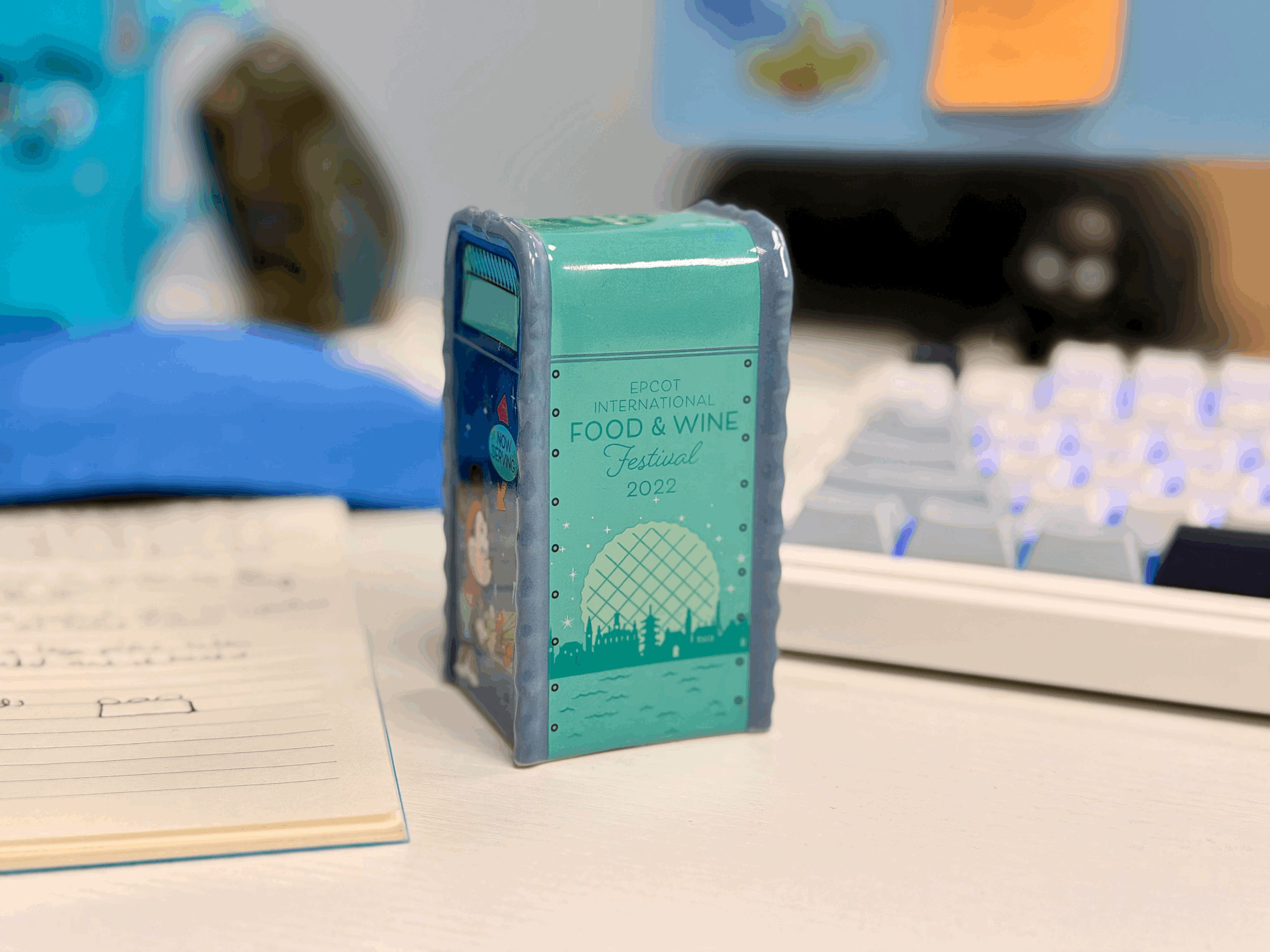
Why does an Epcot trash can salt shaker sit on our Executive Director's desk? Discover how Walt Disney's refusal to accept the carnival status quo drives R3 Generations to reject low expectations and provide five-star dignity, accredited education, and trauma-informed care for opportunity youth.
By Juan Ramos, Founder & Executive Director at R3 Generations
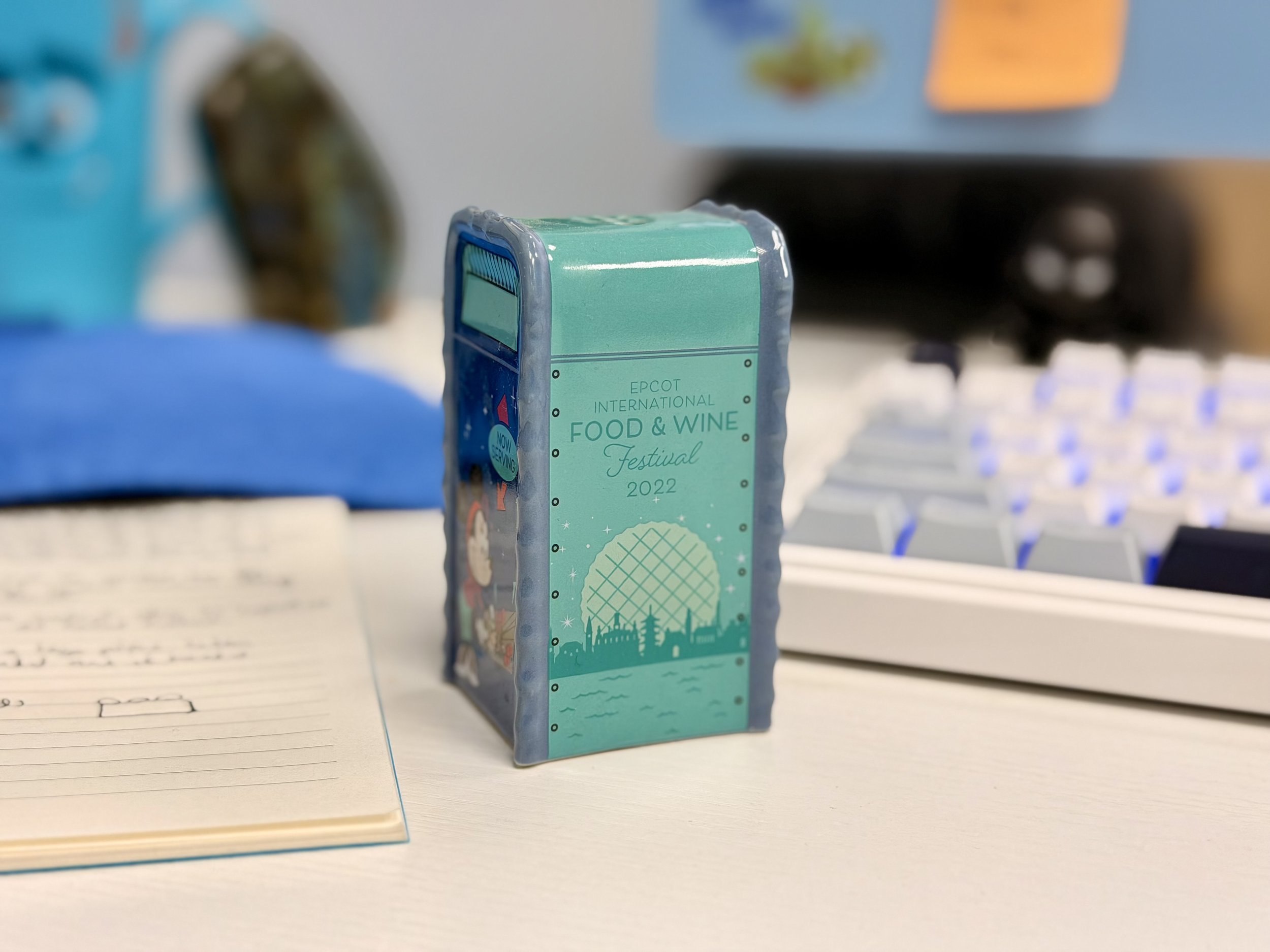
Since 2022, a peculiar object has lived on my desk right next to my notebook and keyboard: a miniature ceramic salt shaker shaped like a theme park trash can from the Epcot International Food & Wine Festival.
To most visitors, it looks like a quirky souvenir. To me, it is one of the most critical leadership principles sitting in my office—a daily physical reminder of why we built R3 Generations and how we choose to treat every young person who walks through our doors.
The Problem with Carnivals
When Walt Disney first set out to build Disneyland in the 1950s, the concept of a modern "theme park" did not exist. The only comparable outdoor entertainment venues were traveling carnivals and traditional amusement piers.
Walt took his daughters to those carnivals, but he hated the experience. Carnivals had a reputation: they were dirty, the staff were often indifferent or abrasive, and guests were treated like marks to be squeezed for tickets rather than valued patrons.
Walt made a statement that challenged the entire entertainment world:
"I want to have a place that's as clean as anything could ever be, and all the people in it are first-class citizens, and treated like guests."
When his design team began planning the park, they ran headfirst into the conventional wisdom of the day. The "industry standard" for public venues was simple: open-top, unenclosed metal barrels. They were cheap, functional, and easy for grounds crews to empty.
They were also unsightly, swarming with flies, and smelly.
Everyone in the amusement industry accepted open barrels because "that's how it's always been done."
Walt refused to accept that standard. He challenged his imagineers to design a fully enclosed trash receptacle with swinging flap doors that kept waste hidden and odors contained. At the time, suppliers pushed back—enclosed cans were far more expensive and required specialized manufacturing. But Walt persisted until they found a manufacturer willing to build them.
The result? Those enclosed, swinging-door trash cans were so effective that they completely redefined public space sanitation. What started as Walt’s refusal to settle for "good enough" became the new global industry standard.
The "Industry Standard" in Social Work and Education
Too often in the non-profit sector, alternative education, and social services, organizations quietly accept the equivalent of open, smelly trash cans. We settle for "industry standard" because the work is hard and resources are tight.
What does the industry standard look like for youth in crisis, foster care, or juvenile probation?
Stale, clinical environments: Beige, windowless rooms with mismatched, broken furniture that feel like a government probation office or a detention annex.
Second-rate options: Unaccredited diplomas rejected by employers and colleges, entry-level job placements that lack living wages or transferable skills, and temporary handouts that manage poverty rather than restoring the whole family with counseling, food security, and career pathways.
Transactional service: Staff who view young people as caseload numbers or grant-reporting metrics rather than human beings carrying profound trauma.
The "Trash Bag" indignity: Foster youth forced to pack their few worldly possessions into black plastic garbage bags when moving between homes.
When you give a hurting child a second-rate environment, you unintentionally reinforce their deepest fear: that they are second-rate human beings.
First-Class Citizens, Not Caseload Numbers
From the very first night I sat in an empty room on Castroville Road, R3 made a non-negotiable covenant: We will never do things simply because "that’s how they’ve always been done" or because "that’s what is easier".
When we opened our first student center, our walls were dull brown. We were exhausted and had no money, but we stayed up until sunrise painting every square inch clean white because our youth deserved a space that felt like home, not a holding cell.
It does not matter if a student enters our doors after being expelled, aging out of foster care, or being escorted by a juvenile probation officer. The moment they step across our threshold, they are not a problem to manage. They are not an outcast. They are first-class citizens.
They receive five-star hospitality, a support system who walk with them through every crisis, and an uncompromised standard of academic and workforce excellence.
If we want to disrupt generational cycles of poverty, incarceration, and educational neglect, we must stop giving opportunity youth the bare minimum. We have to set a standard that reflects the extraordinary worth God placed inside them.
That tiny Disney trash can sits on my desk to remind me every day:
Never accept low expectations just because they are familiar.
Never choose the cheap route when human dignity is on the line.
When you dare to build a higher standard, the rest of the world will eventually have to follow.
Don't settle for the industry standard. Build the new one. Don't quit now.
#LeadershipExcellence #YouthDevelopment #NonProfitStrategy #CustomerExperience #R3Generations #NuGenerations #DignityRestoration #WaltDisneyLeadership
How We Scaled our Non-Profit Across Cities Without Duplicating Services
Scaling a non-profit shouldn't mean competing for grant dollars or duplicating existing community services. Discover the four-step framework R3 Generations used to expand from San Antonio into Dallas, partner with Juliette Fowler Communities, and serve nearly 500 youth while strengthening the local ecosystem.
In the social impact and non-profit sectors, expansion is too often treated like corporate market acquisition. Organizations raise capital, enter a new city, plant their flag, and immediately begin competing with existing grassroots programs for local philanthropic dollars.
The result is systemic fragmentation. Instead of multiplying impact, organizations build isolated islands, replicate services that already exist, and leave vulnerable youth navigating a maze of disconnected providers.
When R3 Generations began exploring an expansion beyond San Antonio, our board chair, Angela Williams, and our leadership team established a clear directive:
“Do not go to Dallas to build an island. Go to build bridges.”
Scaling an organization should never be an exercise in organizational ego. If a community is already serving youth effectively in a specific area, duplicating that work is an inefficient use of resources. True expansion is about identifying where youth are falling through systemic cracks and offering specialized infrastructure to strengthen the existing community ecosystem.
Here is the exact framework we used to scale from our West Side San Antonio roots into Dallas, expand our reach to nearly 500 youth, and graduate over 75 students through the juvenile probation system in our very first chapter.
Step 1: Listen to the Data and Map the Unmet Gaps
We did not target Dallas because of a board retreat or an opportunistic grant. We went because the community called us there.
Near the end of 2024, an undeniable pattern emerged in our inbox. Grow with Google reached out trying to locate an educational provider for a student relocating to Dallas. That exact same day, a case manager contacted us about a foster care youth in San Antonio being transferred to North Texas who desperately needed to complete their accredited high school credential. Within hours, several separate inquiries pointed directly to the Dallas–Fort Worth area. Instead of assuming we had the answers, we initiated a listening campaign.
I researched the DFW youth landscape and compiled a targeted list of 30 youth-serving organizations. I sent a transparent introduction to every single one. The core message was straightforward:
"We are an outreach organization based in San Antonio providing afterschool programming, workforce development, certifications, and accredited high school diplomas. We are not looking to duplicate what you do. We want to know: Are there gaps where our programming can support the students you already serve?"
Out of 30 emails, 26 went unanswered. But the four leaders who responded did not just reply—they recognized a shared mission. Three of those organizations—immediately signed Memorandums of Understanding (MOUs) to partner with us.
Then came the fourth reply.
Step 2: Form Anchor Coalitions Around Radical Generosity
The fourth email was from Lisa Mumford, Director of Children and Youth Services at Juliette Fowler Communities.
When we hopped on our first video call, I had a presentation prepared to pitch our service model. I barely finished introducing myself before Lisa stopped me. She had already researched our history, reviewed our press coverage, and watched our feature on NBC's TODAY Show. She looked through the screen and delivered words that permanently shifted our trajectory:
"R3 belongs in Dallas. You have to be here. We have the space; you come and do what you do, and we’ll provide everything."
Juliette Fowler Communities has over a century of storied service in Dallas. Rather than viewing a young organization from San Antonio with suspicion, they offered radical collaboration. They did not demand administrative overhead or create turf wars. They opened their campus and invited us to build a home together.
Step 3: Persevere Through the Crucible of Growth
Milestones are rarely achieved in easy seasons. Progress is frequently tested in the fires of personal adversity. In the spring of 2025, our team packed our bags to make our first official site visit to Dallas to walk the Fowler grounds. Right after arriving, while standing in the middle of a store, my phone rang. It was my father.
My grandfather—the man who taught me what faith looked like and whose church planted the DNA for R3—was taking his final breaths. We turned the car around immediately and began the hurried drive back down I-35 to San Antonio. Tragically, I did not make it back in time to say goodbye. Only days before, our church had also lost a beloved member, Blanca, to cancer.
In a single three-day span, Angela Williams and I wrote two obituaries, coordinated two services, and officiated both funerals at the exact same hour on the same day in different locations. At that exact moment, my brother and his wife were in the hospital welcoming the birth of their first daughter.
Life, death, and legacy collided all at once.
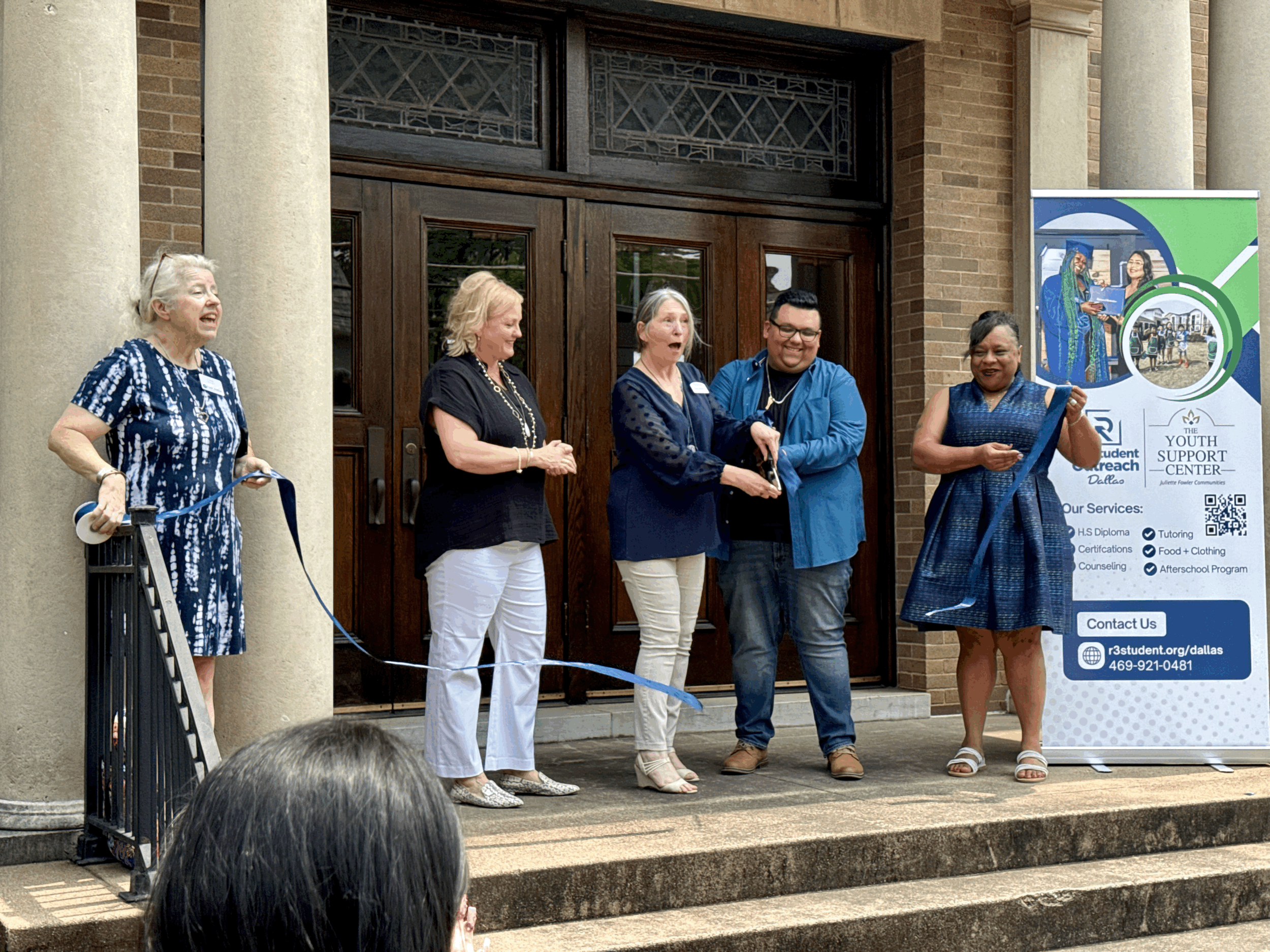
We buried my grandfather on Saturday. By Monday morning, Angela and I were back at our desks. We rescheduled our Dallas tour, drove back up I-35, and refused to let grief derail the calling. When Lisa walked us through the second floor of East Dallas Christian Church, we saw a room already painted blue, a stage ready for future high school graduates, and an open floor plan that felt instantly like home.
Within three weeks, Fowler had the entire floor furnished. We established a computer and tutoring lab, a clothing boutique in partnership with San Antonio Threads, partner meeting rooms, and a dedicated counseling suite to provide free mental health therapy for every enrolled student.
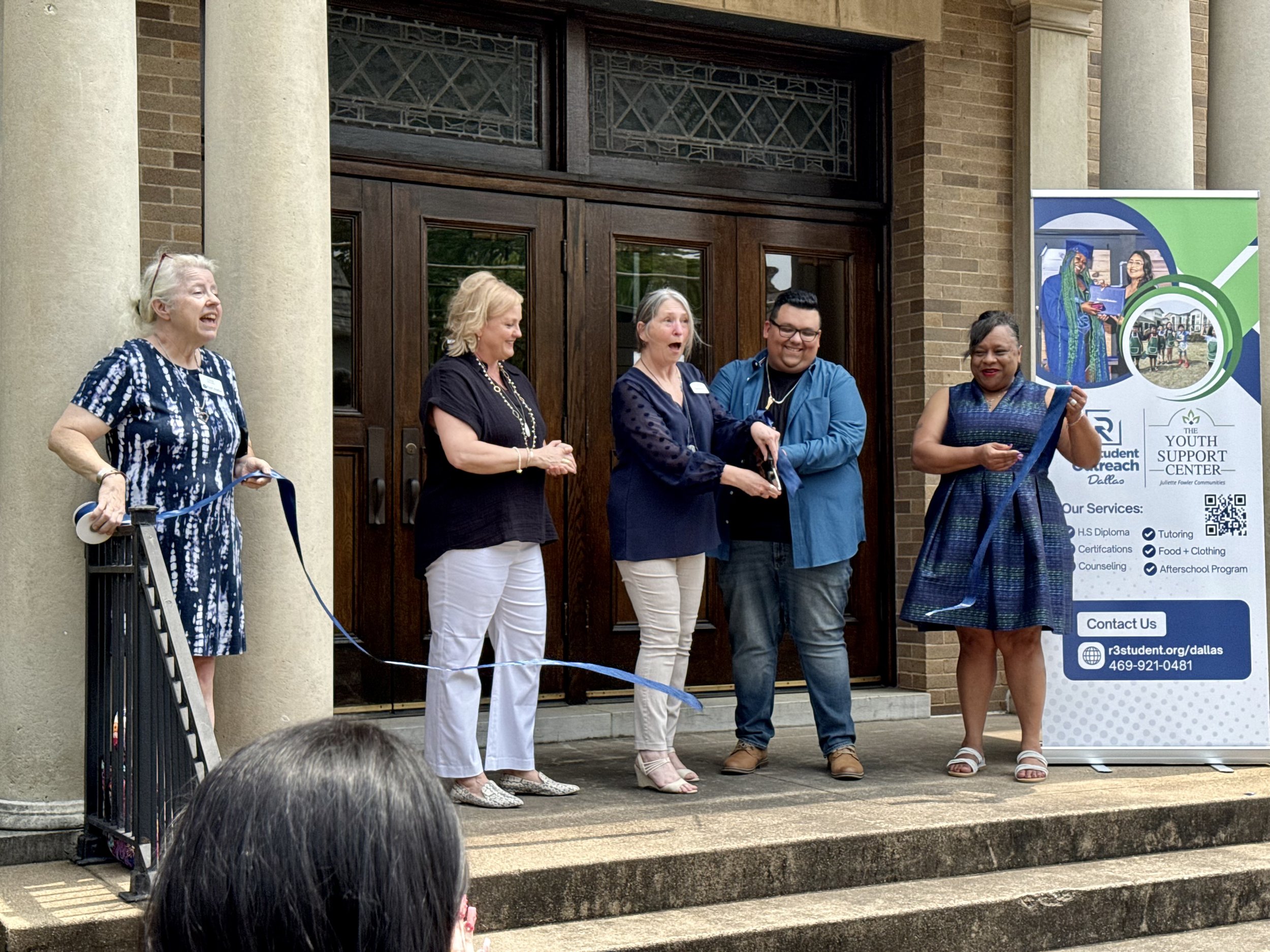
On May 20, 2025, we cut the ribbon on the Juliette Fowler and R3 Youth Support Center.
Step 4: Endure the Ground-Level Operational Grind
A strategic plan on paper means nothing without operational grit.
Since our grand opening, our team has executed the "Tuesday Run" without fail. Every Tuesday morning, our alarm rings at 4:00 AM. We pack our personal vehicle, make our traditional stop at Buc-ee's for breakfast burritos, and drive 270 miles north. We work a full operational day on-site mentoring youth, conducting classes, and coordinating with probation officers until 5:00 PM, before driving back home to San Antonio—often pulling into our driveways past midnight.
That is 476 miles round-trip every single week. That is 22,848 miles a year on my personal engine.
Earlier in our journey, when we expanded to our second San Antonio center at Rolling Oaks Mall, I used to worry about the 45-minute daily commute. Standing in Dallas months later, I had a sudden realization: If we couldn't be trusted with a 45-minute drive across town, how could we ever be trusted with a four-hour drive across Texas?
Faithfulness in small steps prepares the capacity for regional impact.
The Outcome: Measurable Generational Trajectory
By refusing to duplicate services and embedding directly into existing juvenile justice and community networks, the impact was immediate:
500 Youth Served: Providing wraparound casework, free professional counseling, boutique clothing, and emergency aid.
75+ High School Graduates: Working directly with the Dallas Juvenile Probation Office to help justice-involved youth earn regionally accredited WASC diplomas through NuGenerations Private Schools.
Zero Duplication: Every program we operate complements local partners, routing students into employment pipelines without competing for local operational territory.
Horizons: The National Blueprint
Dallas has proven that our model is scalable across state lines.
We are actively preparing to deploy this collaborative blueprint into high-need hubs across the country:
Chicago: Supporting a city where 65% of youth aging out of foster care face immediate housing instability, and juvenile recidivism sits at 32%.
New Orleans: Reaching an area where 16.2% of young adults are disconnected from school or work, and youth poverty in the Lower Ninth Ward exceeds 45%.
Atlanta: Confronting severe social mobility gaps where low-income youth face a 4% chance of escaping generational poverty.
To every non-profit director, foundation officer, and municipal leader looking to solve youth disconnection: Stop operating in silos.
Look at the organizations already fighting in the trenches. Find partners who are willing to sit down, dream together, and offer what they have. When you trade competition for radical partnership, you stop managing poverty and start building generational revival.
Don't quit now.
#NonProfitStrategy #StrategicPartnerships #DallasYouth #ScaleForImpact #R3Generations #YouthEmpowerment #CollaborativeLeadership
Stop Giving Opportunity Youth Unaccredited High School Diplomas
Thousands of opportunity youth work tirelessly to earn high school diplomas, only to discover their credentials aren't accredited or recognized by colleges or the military. Discover how NuGenerations Private Schools fought through systemic barriers to earn regional WASC accreditation, ensuring every graduate holds a diploma that opens real doors.
By Juan Ramos, Founder & Executive Director at R3 Generations
For years in the non-profit sector, I watched a heartbreaking cycle unfold.
A young person in foster care, a teenage parent, or a youth involved in the juvenile court system decides to break the cycle. They endure immense personal trauma, overcome monumental life barriers, and put in the late-night work. They cross a graduation stage, hold up a diploma, and believe the door to their future has finally opened.
Then comes the crushing blow.
They walk into a military recruiting office, apply to a community college, or register for a trade certification program—only to be told: "Your diploma isn't recognized. The program lost its accreditation, or it was never accredited in the first place."
In an instant, their hard work is rendered meaningless. They did everything right, and the system failed them twice.
The Unkind Reality of Dropout Recovery
In our early years at R3, before we built our own school, we routinely referred youth who had dropped out to various city programs, paying their tuition whenever funding was available. But as I accompanied our students to register, I was appalled by what I witnessed.
The staff at these programs were often cold, dismissive, and insensitive to the realities these young people were carrying. Students would return to us months later in tears, saying: "They won't give us our transcripts," "They won't provide tutoring," or "They aren't helping us get access to our classes."
Even worse, many of these organizations claimed to be accredited when they were not. They operated with zero accountability, taking advantage of vulnerable youth who simply wanted a second chance.
We realized very quickly that if we wanted our students to succeed, we couldn't just send them back into an unkind system. We had to build a new foundation ourselves.
Designing a Sanctuary: The Support Advocate Model
In partnership with Our Lady of the Lake University, we set out to build a school specifically designed around the realities of opportunity youth. We gathered feedback directly from the young people we served to identify why traditional and alternative programs failed them.
The barriers were obvious:
Lack of Transportation: Students couldn't afford gas, bus passes, or reliable rides to attend in-person classes daily.
Childcare & Family Obligations: Single parents and primary breadwinners couldn't sit in a classroom from 8:00 AM to 3:00 PM while caring for young children or working to keep food on the table.
We knew the program had to be flexible and virtual, but virtual learning alone creates another danger: isolation. How do you mentor, guide, and protect a student when learning happens through a screen?
Our solution was the creation of the Support Advocate.
Support Advocates are not traditional teachers or disciplinarians. Their sole responsibility is wraparound care. They walk alongside the student to ensure their fundamental human needs are met—whether that means delivering emergency food, providing clothing, resolving a crisis, or simply offering a safe space to be heard. We proved that when you surround a student with radical love and practical support, academic progress follows naturally.
The Wall of "NOs" and the Pursuit of Regional Accreditation
When we first launched as the R3 Learning Academy, we operated as an unaccredited home-school program. But I knew in my heart that wasn't good enough. There was still a risk that a university or employer might reject our students' credentials, and I refused to let our youth hold a diploma that carried any shadow of doubt.
We began reaching out to accrediting agencies, and the rejection was immediate.
Door after door was slammed in our face. Bureaucrats and administrators told us: "It's never going to happen because of how Texas law is set up," or "Your model doesn't fit the traditional mold."
When you are fighting for young people who have been told "no" their entire lives, you learn that a "no" from a system just means you need to ask someone higher.
We bypassed minor accrediting bodies and went straight to the Western Association of Schools and Colleges (WASC)—one of the most rigorous regional accrediting agencies in the nation. Regional accreditation is far more demanding than national accreditation, requiring institutional stability, curriculum alignment, and strict operational standards.
WASC welcomed us with open arms, guiding us through a grueling six-month evaluation. We were simultaneously running a school, learning how to meet Texas graduation guidelines, and adapting our entire operation to satisfy WASC standards.
In December 2023, the news arrived: WASC granted us early ratification for regional accreditation.
Even better, the accreditation was made retroactive to the very day our school opened. Every single graduate who had crossed our stage—past, present, and future—was covered by a diploma recognized by every college, trade program, and military branch in the United States.
Sitting in my office today, I look at our official certificate of accreditation hung right below a framed quote that reads: "It always seems impossible until it's done."
Determination Forged in the Fire: Darienique & The 35-Year-Old Father
Systemic disruption isn't measured in policy papers; it is measured in human lives.
I think of Darienique, one of our very first students. She came to us after being severely bullied, physically harmed, and pushed out of her traditional high school while pregnant. She enrolled in our academy and worked relentlessly. When she gave birth, she literally sent us photos and completed coursework from her hospital bed.
Tragically, just one month after her daughter was born, her newborn passed away.
Our staff told her to stop, to rest, and to take all the time she needed to grieve. But Darienique used her schoolwork as an anchor in the storm. She would walk into our center, sit at her desk, cry tears of immense loss, and keep pushing forward through her lessons.
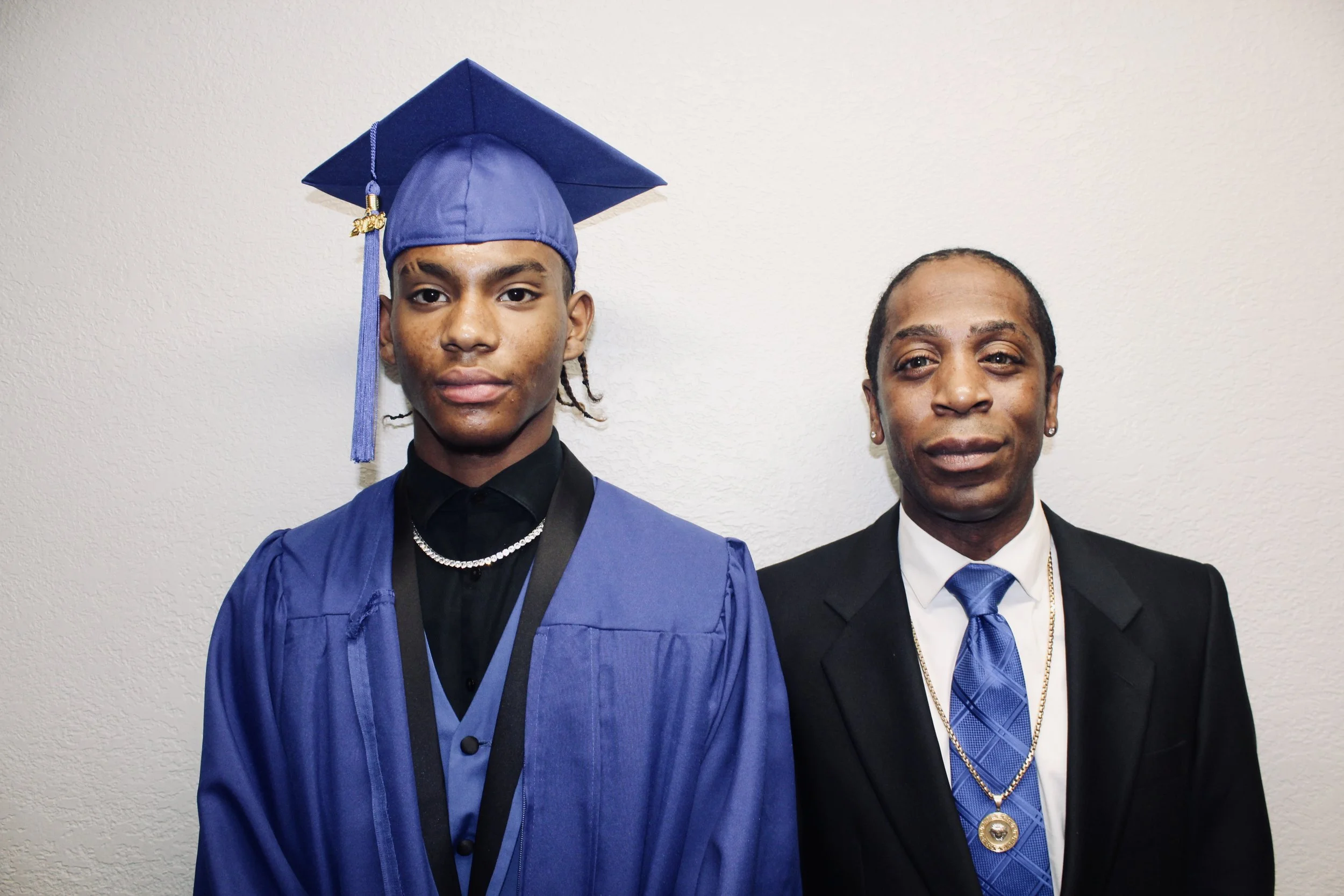
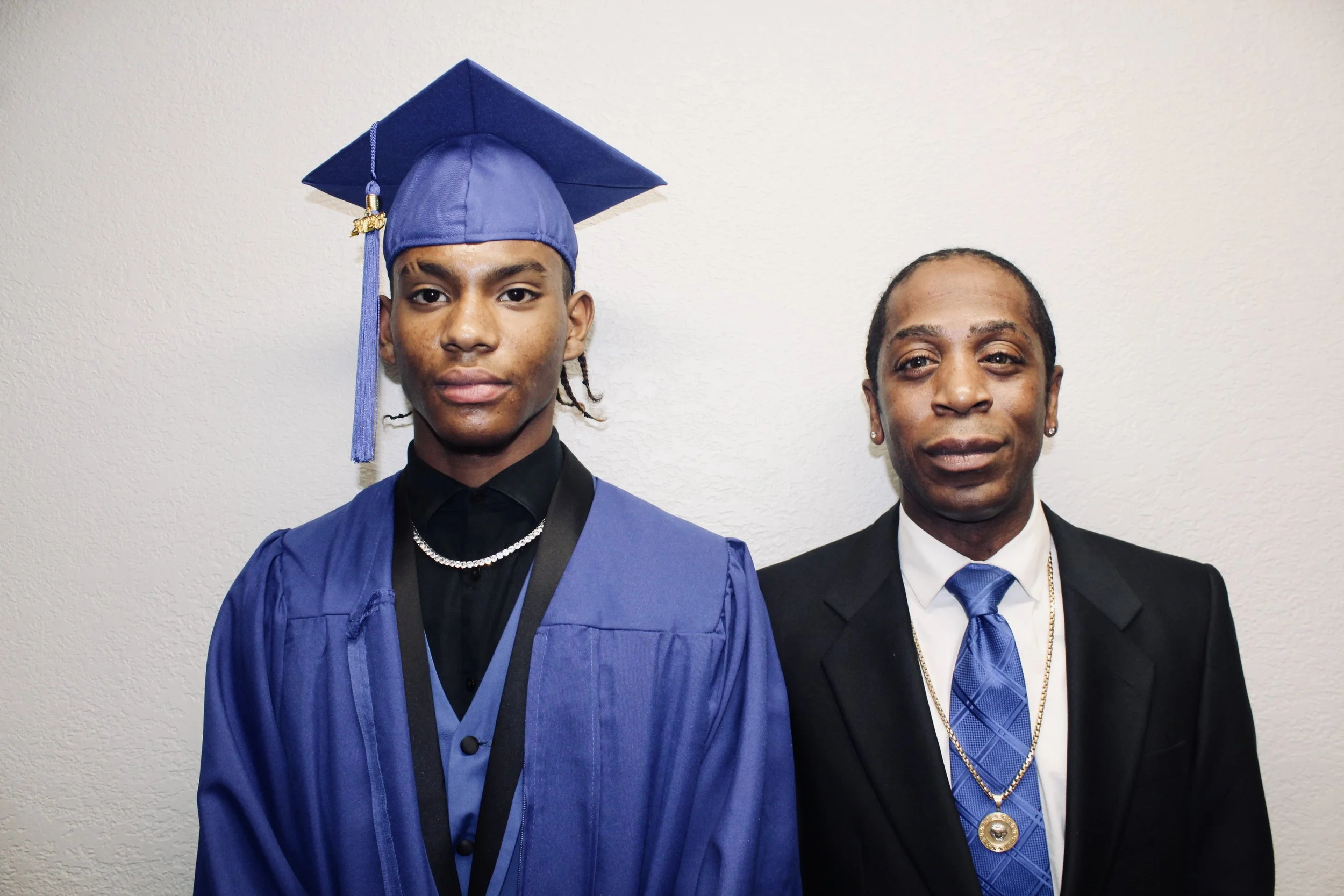
That same year, Darienique walked across our graduation stage in her cap and gown—a living definition of determination for every person in that room.
I also think of a 35-year-old father who enrolled in our adult pathway through a local church partnership. I was personally grading his work, and I sent one of his final essays back for revisions four times. He was deeply frustrated and discouraged, fighting the urge to quit.
On graduation night, he stood on stage and brought his three children up with him. His kids, aged 4 to 15, took the microphone with tears streaming down their faces, telling the crowd how watching their dad refuse to give up had changed their entire family.
Backstage after the ceremony, he walked up to me, looked me in the eye, and said: "Thank you for making me do that essay right. I was frustrated, but I needed you to push me."
NuGenerations Private Schools: The Horizon
As we celebrate seven years of impact and transition our overarching organization to R3 Generations, our academy has officially evolved into NuGenerations Private Schools.
We have graduated over 100 students in San Antonio and recently celebrated our largest Dallas graduation alongside the Dallas Juvenile Probation Office.
Moving forward, we are expanding our model:
The Fast-Track Lifeline: Continuing our rapid-completion pathway for youth in acute crisis who need an immediate credential to enlist, work, or stabilize their lives.
The Year-Round Hybrid Experience: Introducing full, semester-long programming that eliminates the "summer slide" and provides a permanent, structured anchor for foster and justice-involved youth who need long-term stability.
Our youth are not failing because they lack ambition. They are failing because we ask them to navigate a rigid 19th-century educational structure while surviving 21st-century trauma.
It is time to stop offering second-rate options to young people who need the very best. They deserve uncompromised rigor, flexible support, regional accreditation, and absolute dignity.
If we want to close the dropout pipeline once and for all, we must build schools that are as resilient, flexible, and ambitious as the students walking through their doors.

Restoring Dignity, Rewriting Destinies: Highlights from Our 2026 Institutional Impact Report
When basic-needs stabilization meets trauma-informed care and academic rigor, triumph is inevitable. Read highlights from our 2026 Institutional Impact Report to see how flexible Competency-Based Education and certified Support Advocate mentorship are restoring dignity and rewriting destinies for youth across Texas.
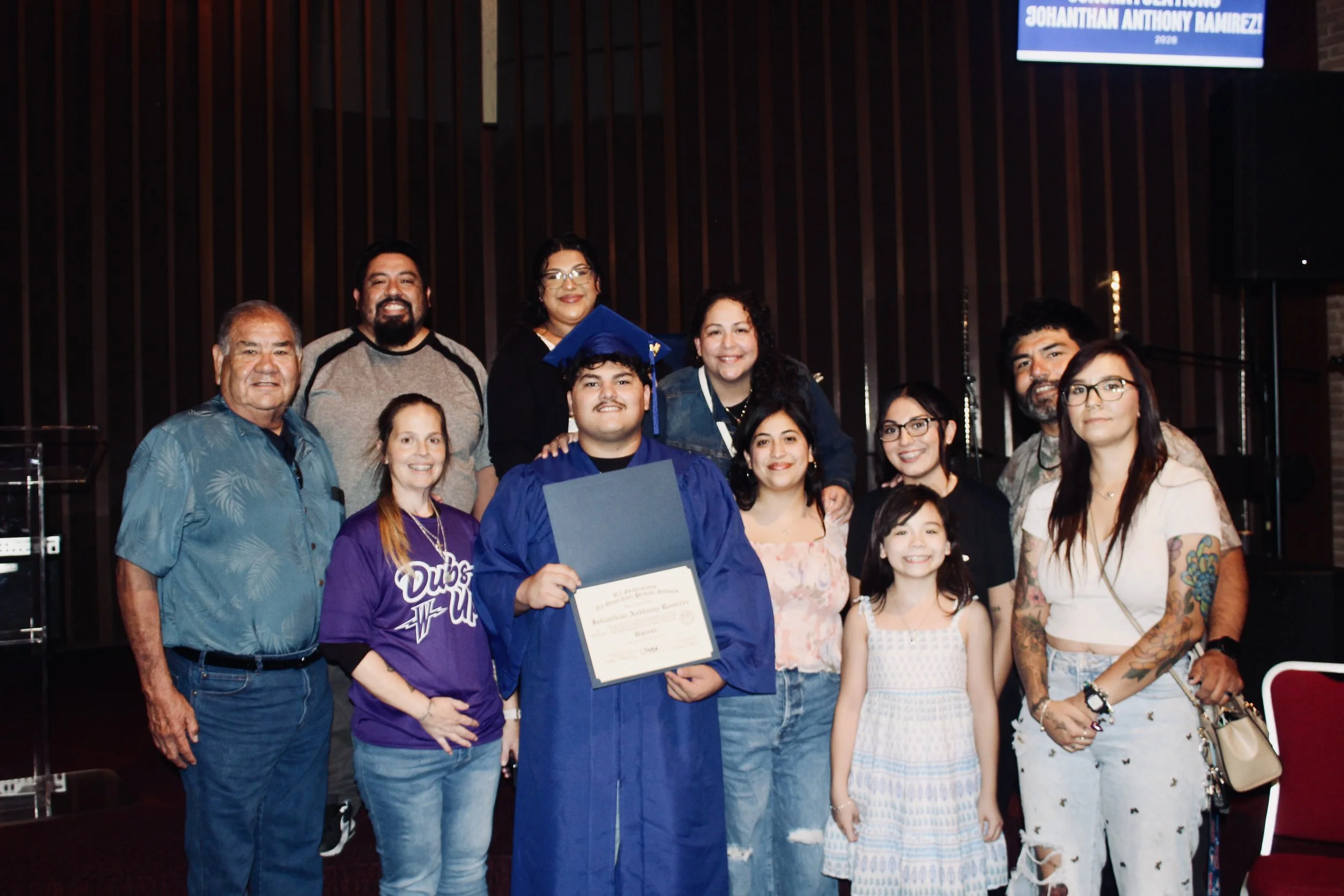
Across Texas, thousands of young people are pushed outside traditional public school systems each year—not due to a lack of talent or potential, but because traditional educational structures are often ill-equipped to withstand the complex, adult-sized burdens they carry. From teen parenting and foster care transitions to court involvement and compulsory 40-hour workweeks to help their families keep food on the table, these young adults need an educational sanctuary that meets them where they are.
At NuGenerations Private Schools and R3 Generations, we operate on a core principle: when basic-needs stabilization meets trauma-informed care and academic rigor, triumph is inevitable.
We are thrilled to officially release our 2026 Institutional Impact Report: Restoring Dignity, Rewriting Destinies. This comprehensive publication documents audited academic, workforce, and community stabilization outcomes across our San Antonio and Dallas hubs through September 2026.
Key Findings & Data Highlights (2026 Operating Cycle)
Our 2026 report demonstrates that an integrated model combining flexible Competency-Based Education (CBE) with certified Support Advocate mentorship achieves completion gains rarely seen in traditional alternative settings:
Significant Graduation Velocity: Through nine months of 2026, NuGenerations conferred 74 verified high school diplomas, achieving an 82.2% cohort graduation rate among enrolled opportunity youth. This represents a +32.1% net increase in diplomas compared to our full-year 2025 baseline.
District Collaboration & Credit Recovery: Demonstrating our commitment to district partnership, 26 students successfully completed credit recovery with NuGenerations and proudly returned to their home public or charter districts to complete their education.
86.2% Combined Academic Success Rate: Across all evaluated student trajectories, 100 out of 116 enrolled learners achieved a verified educational victory (diploma conferral or credit recovery transition).
Whole-Family Stabilization: Through our integrated division infrastructure—including the Williams Family Initiative—our team served 2,100 unduplicated youth and provided basic-needs stabilization (food, clothing, case management) to 660 family units.
Beyond the Diploma: Real Economic Mobility
High school graduation is never our finish line—it is the essential launching pad for multi-generational economic mobility. Starting in March 2026, NuGenerations integrated an expanded workforce pathway directly into secondary completion:
Dual Credentialing: 100% of 2026 diploma graduates earn an industry-recognized IBM Microcredential alongside their high school diploma.
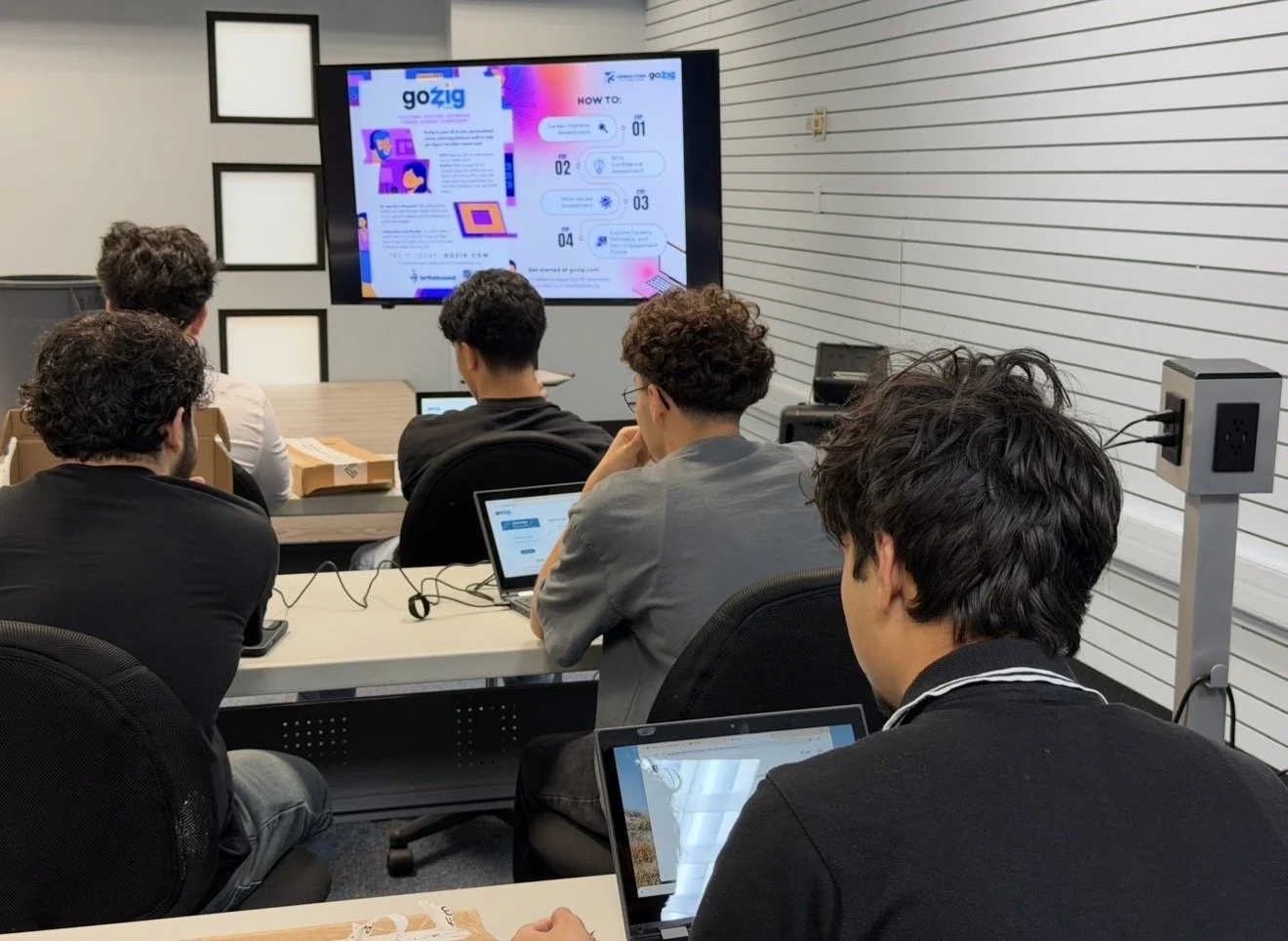
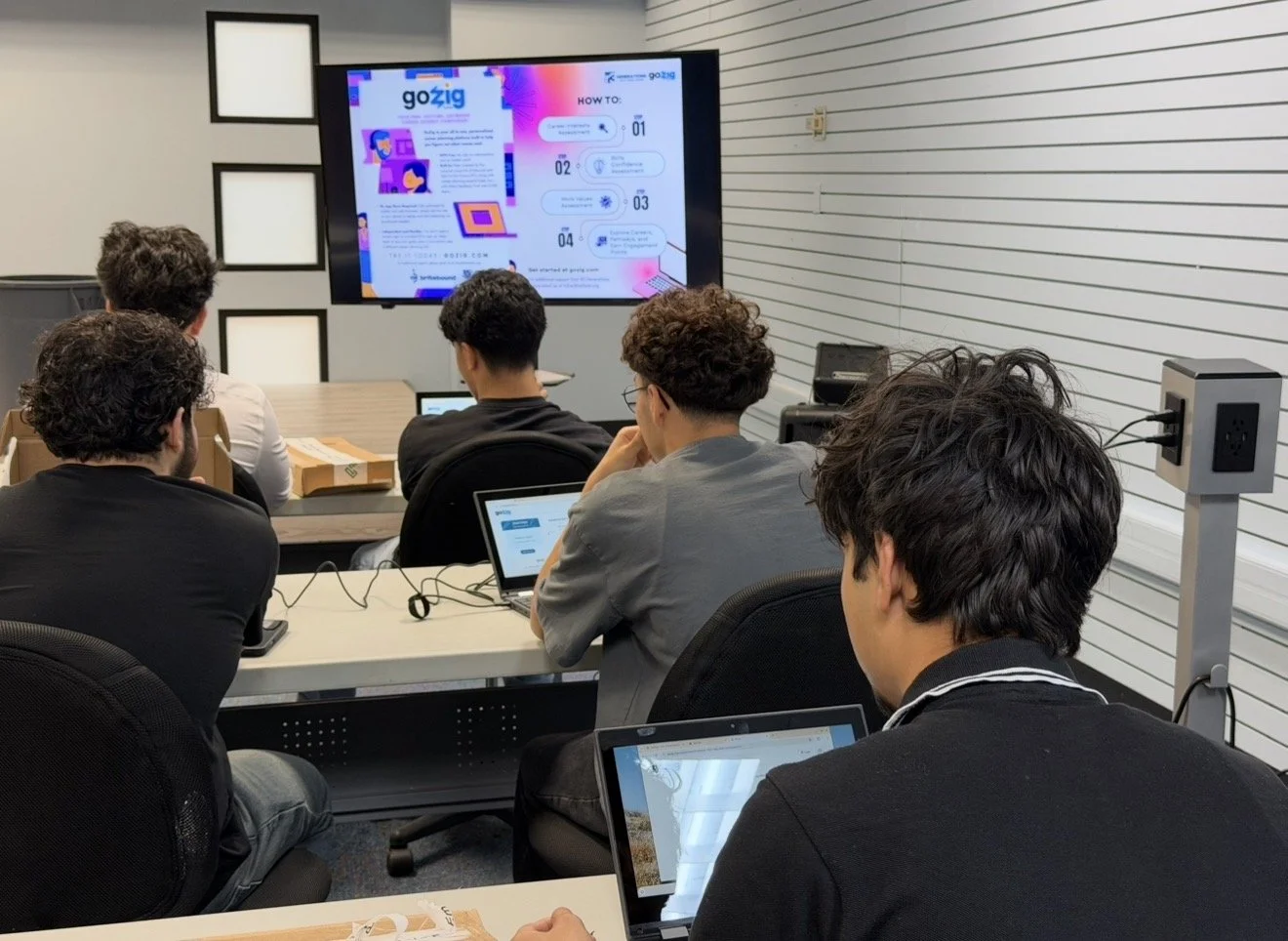
Career Navigation: All graduates receive personalized one-on-one professional career coaching and access to GoZig, a mobile-friendly pathway navigation platform developed in partnership with Jobs for the Future (JFF) and Britebound.
Post-Secondary Acceleration: Graduates are actively matriculating into regional higher education systems (such as St. Philip's College and Palo Alto College), pursuing university degrees at Grand Canyon University and Prairie View A&M University, and entering firefighting academies and technical trade pathways.
Read the Full Report & Join Our Mission
While these metrics celebrate extraordinary human resilience, our work is far from complete. Our waitlists continue to grow, with over 45 prospective students currently in our admissions queue waiting for an advocate and a second chance.
Whether you are a foundation champion, community partner, volunteer, or advocate, we invite you to explore the full data, methodology, and student stories inside our report.
They Mocked My "Shaq Shoes" in 7th Grade. Today, We’ve Served Over 10,000 Youth.
Every educator knows the difference between students who simply pass through a classroom and those who leave an indelible mark on your soul. For years, I was just a chubby, glasses-wearing middle school kid on the West Side of San Antonio trying desperately to fit in.
My parents loved me dearly, but we didn’t have money for the "bells and whistles." When gym class required specific athletic shoes, everyone else showed up in Nikes or Jordans. My family bought me $15 "Shaqs" from the local store.
That single detail made me a target.
In the hallways, my nickname became "Shaq Shoes." Kids pushed me into lockers and mocked me in changing rooms. On the playground, a group of girls would trail behind me, pelting my back with small stones until my shirt was dotted with white chalk spots.
Then came the day in gym class when a silver Walmart watch my father had given me—a gift I cherished—was unclipped from my wrist, hurled across the room, and shattered on the floor. When I took the broken pieces to a young assistant coach, he handed them back, told me I’d have to get a new one, and simply walked away.
The worst, however, was yet to come.
The Classroom Floor and the Broken Promise
One afternoon during a substitute Bible class, that same young coach stood watching while three boys cornered me by the door. The coach slowly walked over and threw a heavy jacket over my head.
Before I could react, I was pulled to the floor. Through the dark fabric, I felt the blows raining down on my back. I heard their laughter, felt the heat of embarrassment burning my face, and listened to the silence of an authority figure who did nothing.
When the bell rang, the room cleared out. I pulled the jacket off, stood up in an empty classroom, and didn’t cry. I walked to my next class convinced someone would eventually comfort me—that someone would step up to be my advocate.
Nobody did.
Days later, when my mother gasped at the purple bruising across my back, my parents took me straight to the superintendent’s office. I sat across from an administration that was supposed to protect me. Instead, the superintendent looked me dead in the eye and said:
"Your parents reported that you were beaten up in class. But I do not think this is actually what took place. I think if you really think about it, what happened was just playful and fun. Don't you think?"
In that room, I shut down. I learned what it felt like to be completely invisible, unprotected, and disposable.
For years into my adulthood, I carried those hallway wounds. Every time I stood in front of a crowd to speak, I had a nervous habit of pulling down my shirt because of how they had mocked me on the floor that day.
What I didn't realize then was that God was allowing me to endure a season of suffering so that I could one day heal others. My pain was being forged into a mandate.
A Blank Sheet of Paper and a Circular Folding Chair
By 2018, I had built a successful marketing agency, but my soul felt deeply disconnected. I was helping build businesses, but I wasn't building people. I kept reading heartbreaking news stories about cyberbullying and youth suicide in San Antonio.
One afternoon, I sat down between client projects, pulled out a blank piece of paper, and began writing the words God gave me: Home. Haven. Protection. Inspire.
Down in the corner, I scribbled:
WHO: Broken, wounded, needy, oppressed youth who need to take refuge.
That scribbled note now sits framed on my office wall.
Without a bank account or non-profit credentials, I found a dark storefront on Castroville Road with a single "For Lease" sign blazing in the window—right down the street from the middle school where I had been beaten.
I sat down at a Red Lobster with Angela Brown Williams, who would become my board chair and rock through every trial. She wrote a "hot check" right there at the table to cover our initial lease deposit, praying the funds would be there when it was cashed. The check cleared.
The first night I walked into that empty center, there was no furniture except a single black circular folding chair I had brought from home. I placed it in the center of that empty, brown-walled room, sat down in the quiet, and prayed:
"Okay, God. I'm here. Whatever You want to do next, I'm ready."
Living a Double Life
That first year was a grueling test of endurance. Rent was $1,300 a month, and corporate sponsorships vanished after week four.
To keep the lights on, I lived a double life. I woke up at 5:00 AM every morning to drive for Uber and Lyft. At 8:00 AM, I’d open the R3 center and mentor youth all day. The second we clocked out at 5:00 PM, I’d turn the rideshare apps back on and drive until 10:00 or 11:00 at night. I didn't take a single cent in salary for nearly two years.
One afternoon, our landlord walked into an empty center while we were three months behind on rent. She looked at me and asked the question that had been haunting my sleep:
"Juan, is all this worth it?"
Without hesitating, I looked her in the eye and said, "Yes. It is all worth it."
I wasn't thinking about our empty bank account—I was thinking about a young man who had walked in just days prior. He lived in the apartments behind our building and had been suspended from school indefinitely because he didn't own closed-toe shoes; he only had slides, and the school wouldn't let him on campus.
That week, we checked our non-profit bank account—which was "healthy" if it had $100 in it. My brother and I took that young man to the mall. He had never been inside a mall to shop for himself, and he had never opened a brand-new shoe box.
By the end of that school year, that same young man walked back into R3 with his report card. He was an A/B student, a star on the football team, and had just been awarded a full-ride scholarship to his dream college.
All because someone decided he was worth a pair of shoes.
12,000 Meals and an Email from NBC
When the 2020 pandemic locked the world down, our center’s doors were forced shut. But on the West Side of San Antonio, school closures meant children were going hungry.
Angela Williams—who was facing her own severe business losses—stood in our center's kitchen in the Texas heat, working 13-hour shifts from 6:30 AM until 2:00 AM making hot meals.
Lines of cars stretched for blocks. Over five months, our small team delivered over 12,000 hot meals and 36,000 meal packs to families in distress.
One afternoon, an email popped up in our inbox from an NBC producer. I almost deleted it, assuming it was a scam. Days later, we were on a live Zoom call with Al Roker on NBC's TODAY Show.
Midway through the interview, Al looked at us with a twinkle in his eye and said, "Juan, Angela, on the count of three, open your front doors."
I walked to the front door, opened it, and stopped breathing. A parade of Walmart trucks and cars lined Castroville Road. Dozens of workers stepped out to unload thousands of dollars worth of fresh meat, groceries, and supplies, completely overrunning the empty wooden shelves we had built by faith months prior.
National media saw a viral moment. We saw God saying: "I see you. Don't quit now."
The Power of Second Chances
Over the years that followed, R3 kept evolving to meet every gap our students faced:
When dropout recovery programs offered unaccredited credentials: We created NuGenerations Private Schools. We fought through bureaucratic doors to secure regional accreditation, ensuring over 120 graduates to date held diplomas recognized by colleges, trades, and the military.
When court-involved youth lacked employment: We built the Youth Employment Mentorship Program (YEMP), providing Google scholarships, soft-skills training, and paid internships that yielded a 95% completion rate.
When Dallas called for help: We partnered with Juliette Fowler Communities to build a turnkey youth center that has served nearly 500 youth and graduated 75+ students via the Dallas Juvenile Probation Office.
When dignity needed restoring: We joined forces with San Antonio Threads, carrying forward a legacy that has provided boutique-quality clothing to over 100,000 youth in crisis.
From R3 Student Outreach to R3 Generations
We changed our name because our work is no longer just about helping a student pass a class or survive a crisis. It is about generational transformation.
When a young woman named Sabrina became the only one of twelve grandchildren in her family to earn a high school diploma through our academy, that wasn't just an educational win—that was generational change.
To every person reading this who is currently walking through a season of suffering, discouragement, or unanswered questions: Don't quit now.
Your heartache can be repurposed into a heartfelt message of hope. The very things intended to break you can become the blueprint for God's purpose in your life.
Seven years ago, we started with a single black chair and a $100 bank account. Today, we are expanding across Texas, with our eyes on Chicago, New Orleans, and Atlanta.
Lord, let the future begin.
To read our full 7-Year Anniversary Book, partner with our mission, or refer a student, visit us at r3generations.org.
#YouthDevelopment #TraumaInformedLeadership #NonProfitScaling #R3Generations #OvercomingAdversity

Celebrating an Incredible Legacy & New Chapter! ✨
R3 Generations has officially announced it will take the helm of San Antonio Threads following the retirement of its visionary founder, Cathy Hamilton, this year. This monumental transition marks a new chapter for the nonprofit organization, which has experienced exponential growth since its inception. As of May 2026, San Antonio Threads celebrates a historic milestone, having served a cumulative total of 100,000 youth in crisis.
FOR IMMEDIATE RELEASE
SAN ANTONIO, TX — May 28, 2026 — R3 Generations has officially announced it will take the helm of San Antonio Threads following the retirement of its visionary founder, Cathy Hamilton, this year. This monumental transition marks a new chapter for the nonprofit organization, which has experienced exponential growth since its inception. As of May 2026, San Antonio Threads celebrates a historic milestone, having served a cumulative total of 100,000 youth in crisis.

Restoring Dignity to Youth in Crisis
Cathy Hamilton founded San Antonio Threads with a mission that went far beyond simply giving away clothes; she launched a movement to restore a sense of worth to overlooked young people. After witnessing foster youth moving their entire lives in black trash bags and wearing ill-fitting, worn-out clothing, Hamilton established a strict "new only" policy. She envisioned a boutique-style environment where homeless, foster, and crisis-involved youth could shop for free, choosing brand-new clothes that gave them a true sense of identity and confidence.
A Seven-Year Journey Culminates Under One Roof
The partnership between R3 Generations and San Antonio Threads began in 2019, when both organizations realized they were serving the same vulnerable population of foster and justice-involved youth in San Antonio. Over the next several years, the professional alliance blossomed into a deep, collaborative bond as the organizations expanded services and even implemented a clothing closet model during R3's expansion into Dallas.
The relationship reached its natural culmination in early 2026 when the organizations decided to co-locate and "move in together," establishing a holistic, one-stop-shop sanctuary. Under this shared roof, students can work on an accredited high school diploma, receive mentorship from R3, and walk down the hall to select brand-new apparel from Threads.
"Cathy Hamilton’s life is a reminder that one person’s refusal to accept the status quo can clothe an entire generation in hope," stated R3 leadership. "We feel the immense weight of carrying her sacrifice and years of service forward. Cathy isn't just a partner; she is part of the R3 story, and we are deeply honored to steward her legacy, carry forward her vision of dignity restoration, and share a future."
Looking to the Future
As Cathy Hamilton transitions into retirement, R3 Generations is fully committed to ensuring that her foundational vision lives on and thrives. While continuing to relentlessly serve the local youth of San Antonio, the ultimate trajectory for the R3 Generations-SA Threads program is to expand this impactful model beyond Texas to youth all across the United States.
About San Antonio Threads
San Antonio Threads is a vital sanctuary for youth in crisis, including teenagers who are homeless, in foster care, or escaping crisis situations. Operating with a strict "new only" policy, it provides referred youth with a boutique shopping experience to select clothing, shoes, and accessories for free, replacing the "trash bag" experience with dignity, choice, and style.
About R3 Generations
R3 Generations is a nonprofit organization dedicated to serving foster care and justice-involved youth by providing comprehensive internal tools for success, including mentorship, education, and accredited high school diploma programs. By partnering and co-locating with San Antonio Threads, R3 delivers a complete wraparound service model that combines internal empowerment with external confidence.
The Neurobiology of Resilience & The R3 Framework
Operationalizing "Love" as a Clinical Intervention in Trauma-Informed Case Management
Resources from: University Health - The Architecture of Resilience: Advanced Trauma-Informed Strategies for Modern Student Outreach

R3 STUDENT OUTREACH & S.A THREADS ESTABLISH INTEGRATED HUB FOR HOLISTIC YOUTH EMPOWERMENT
Two prominent San Antonio-based youth organizations, R3 Student Outreach and San Antonio Threads (SAT), have finalized a strategic co-location agreement, establishing a centralized resource hub to provide comprehensive, integrated services for vulnerable youth aged 12 to 21.
Building on a foundational relationship established in 2020, this co-location represents an expanded, formalized partnership designed to mitigate logistical barriers often faced by referred youth—including those in foster care, experiencing homelessness, or aging out of state care. By delivering services "under one roof," the alliance ensures that every young person who seeks support immediately accesses a continuum of care addressing both essential physical needs and long-term academic and personal development.
Co-location Centralizes Access to New Clothing, Academic Support, and Comprehensive Mentorship for At-Risk Youth (Ages 12-21)
SAN ANTONIO, TX – October 10, 2025 – Two prominent San Antonio-based youth organizations, R3 Student Outreach and San Antonio Threads (SAT), have finalized a strategic co-location agreement, establishing a centralized resource hub to provide comprehensive, integrated services for vulnerable youth aged 12 to 21.
Building on a foundational relationship established in 2020, this co-location represents an expanded, formalized partnership designed to mitigate logistical barriers often faced by referred youth—including those in foster care, experiencing homelessness, or aging out of state care. By delivering services "under one roof," the alliance ensures that every young person who seeks support immediately accesses a continuum of care addressing both essential physical needs and long-term academic and personal development.


Maximizing Impact Through Integrated Service Delivery
The joint facility provides immediate synergy, leveraging the core competencies of both organizations:
San Antonio Threads (SAT) provides youth with a private, dignified, store-like experience, offering new clothing, shoes, toiletries, and essential items at no cost. This service restores self-esteem and provides the foundational stability necessary for future success.
R3 Student Outreach connects the same youth with its comprehensive wraparound services and programs. By eliminating the need for a second referral and journey, the hub provides immediate access to all four core R3 programs:
R3 Learning Academy (Diploma & Certifications): Offers an accredited, fast-track model for students aged 16–24 to complete their high school diplomas.
R3 Excel (Afterschool): Provides high-quality, STEM-focused afterschool programming, resources, and mentorship for in-school youth.
The Williams Family Initiative (Clothing & Food): Provides emergency provisions, including food, groceries, and essential supplies, to families in distress.
R3 Institute of Career Pathways: Focuses on workforce development, career coaching, and vocational skills training to transition youth into sustainable employment.

San Antonio Threads emphasizes that this unified approach is critical for the success of their clientele.
"The seamless delivery model ensures that the confidence and dignity derived from receiving new clothing are immediately leveraged into actionable support," said Cathy Hamilton, CEO and Founder of San Antonio Threads. "This alignment is critical, allowing us to simultaneously address immediate physical needs and engage youth in R3’s robust development programs that chart a definitive course for future stability and success."
Research consistently shows that integrated service delivery is vital for at-risk youth because single-focus programs often fail to engage or sustain participation among clients with complex, intersecting needs. This partnership addresses immediate physical and emotional needs while simultaneously delivering the academic and career guidance crucial for long-term success.

"This strategic co-location is fundamentally about resource integration," said Juan Ramos, Co-Founder of R3 Student Outreach. "By positioning R3’s academic and career programming alongside San Antonio Threads' provision of essential goods, we create a direct pipeline from restored dignity to long-term educational attainment, maximizing our community impact and operational efficiency."
The newly integrated hub is expected to set a new standard for youth service delivery in San Antonio, increasing the velocity with which young people move from crisis intervention to long-term empowerment. This collaborative framework is intended as a model that can be duplicated around Texas and beyond.
How the Community Can Support
Both organizations rely on the generosity of the community to sustain and expand their impact:
To Support R3 Student Outreach: Financial donations are vital to support the operational costs of the Learning Academy, mentorship programs, and outreach services. To donate, please visit the R3 Student Outreach website at r3student.org.
To Support San Antonio Threads: Donations of new clothing, shoes, accessories, and full-sized toiletries are crucial. Financial contributions are also accepted. For a list of immediate needs or to make a financial gift, please visit the San Antonio Threads website at sanantoniothreads.org.
About San Antonio Threads
San Antonio Threads is a 501(c)(3) non-profit organization that provides new clothing and accessories for free to referred, at-risk teens (ages 12–21), including those in foster care, experiencing homelessness, or facing emergency placements. Its mission is to provide a safe and nurturing shopping experience that restores self-esteem and supports youth in reaching their full potential. (sanantoniothreads.org)
About R3 Student Outreach
R3 Student Outreach is a non-profit organization dedicated to serving youth and young adults (ages 10–24) in San Antonio. Its mission is to Revitalize, Renew, and Restore the lives of young people through high-quality programming, mentorship, and accredited educational pathways. The organization's four core programs are: R3 Learning Academy, R3 Excel, The Williams Family Initiative, and R3 Institute of Career Pathways. (r3student.org)
Media Contact:
Juan Ramos
R3 Student Outreach, Executive Director
juan@r3student.org
210-702-0978