

By Juan Ramos, Founder & Executive Director at R3 Generations
Across our nation, millions of young people aged 16 to 24 are disconnected from both school and the workforce. Often referred to as "opportunity youth," these are young people navigating foster care transitions, past involvement in municipal or juvenile courts, or the economic weight of supporting their households.
When a young person gets sidelined by life circumstances, conventional systems often respond with punitive measures or dead-end, low-wage jobs that offer no upward mobility. When legitimate economic ladders are absent, illegitimate markets step in to fill the void.
At R3 Generations, we believe youth are not failing because they lack talent or ambition; they are failing because they are locked out of modern career pipelines.
Through the R3 Institute of Career Pathways, we have developed an actionable, replicable workforce development model that moves opportunity youth out of courtrooms and into sustainable careers. Here is how our job readiness model operates today—and where we are taking it next.
Pillar 1: Remove Economic Friction (The "Earn While You Learn" Runway)
The single greatest failure of traditional job readiness training is expecting youth in crisis to train for free. When a young person must choose between attending an unpaid professional development class or paying rent, survival will always win.
The R3 Institute removes this barrier by paying students to develop professionally.
Through our Youth Employment Mentorship Program (YEMP), we structured our training around real financial security: we pay every participant a competitive wage of $13-$14 an hour for 30 hours a week. We pay them for their classroom training time, their on-site employer hours, and their post-work evaluations.
Our workforce curriculum is broken into three intentional phases:
Phase 1: Pre-Work Experience: Intensive preparation focusing on foundational job readiness, where staff evaluate resumes and match students with vetted employers.
Phase 2: The Work Experience Internship): Interns are placed directly into active workplaces with employers recruited through local partnership.
Phase 3: Career Launch: Post-work experience training focused on updating resumes, conducting mock interviews, and "opportunity discovery" for permanent placement.
The results of this paid runway are undeniable: a 95% completion rate, with over 80% securing job offers or pursuing further education.
Pillar 2: Job Readiness & The Architecture of the Mind
You can connect youth to great-paying jobs, but if you do not transform their minds and teach them how to navigate a professional environment, their past trauma will consume their forward movement.
A job is a tool, but holistic mentorship is the foundation.
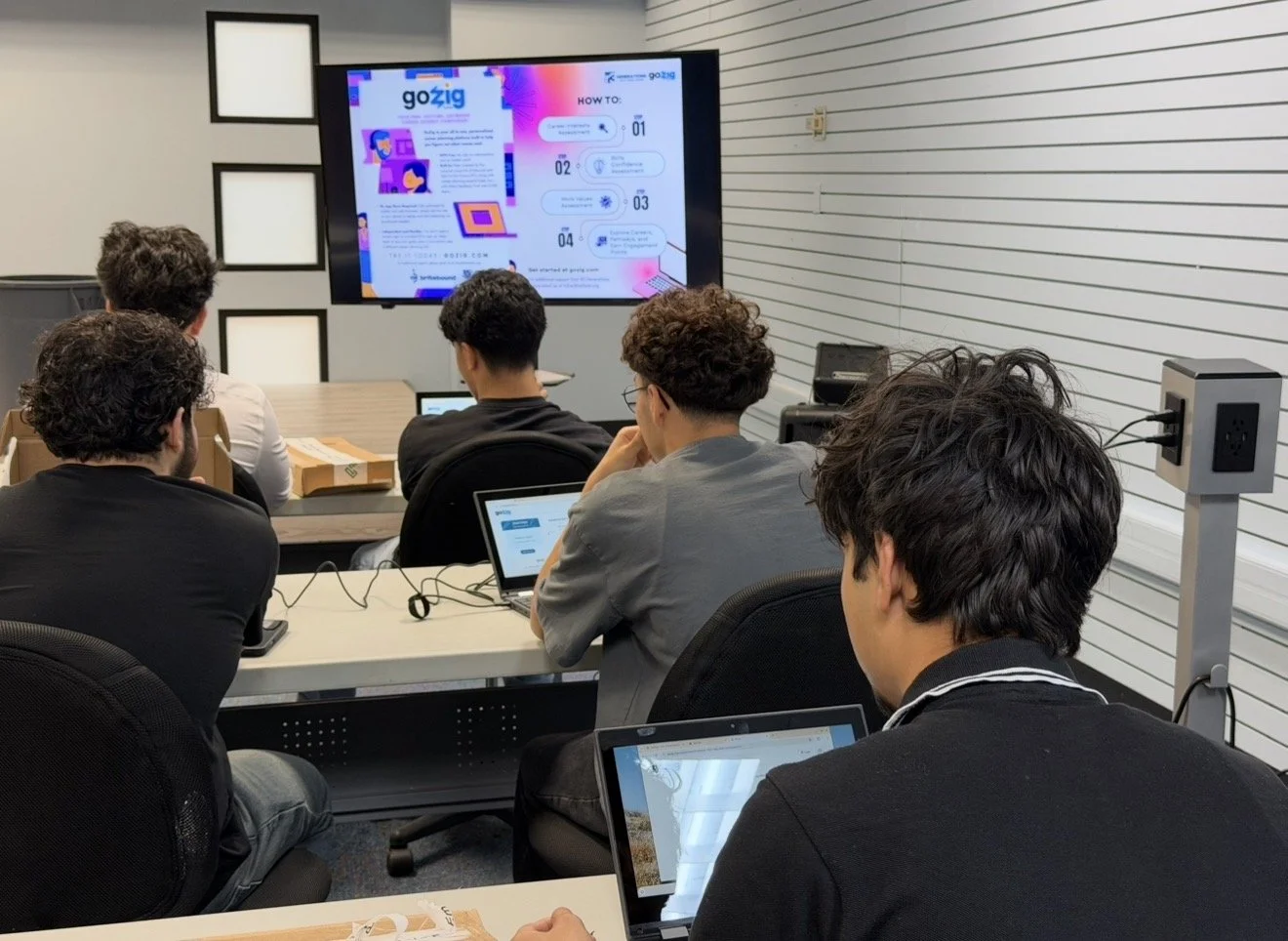
Before our youth ever step foot into an internship, we focus heavily on the soft skills that are rarely taught to opportunity youth. Our job readiness curriculum dives deep into conflict resolution, honesty in the workplace, and navigating the technical side of HR and payroll.
Every student is also supported by a Support Advocate—a professional dedicated to ensuring their basic needs are met. If a student lacks professional interview attire, we partner with San Antonio Threads to provide them with a brand-new wardrobe. If they face a housing crisis, we deploy wraparound services so they can remain focused on their career development.
Pillar 3: Scaled Trade & Certification Pathways
True workforce equity means providing viable, diverse pathways into skilled trades and modern certifications.
To supplement these trade pathways, we also equip our youth with digital fluency. Through our Google Partnership—extended through 2028—the R3 Institute provides 500 full scholarships for in-demand professional certifications in fields like IT support, project management, and data analysis, giving young adults a modern toolkit to compete in the workforce.
Alongside hands-on trades, we equip our youth with enterprise-ready credentials through IBM Microcredentials. By integrating IBM’s skills-based learning modules into our workforce curriculum, students can earn recognized digital credentials in high-growth fields including artificial intelligence, cloud fundamentals, professional workplace skills, and cybersecurity concepts. These microcredentials validate our students' practical competencies to corporate hiring managers, giving opportunity youth stackable proof that they are workforce-ready from day one.
Where We Are Going: Expanding the R3 Frontier
Having successfully graduated over 15 cohorts through the R3 Institute and scaled our operations across San Antonio and Dallas, R3 Generations looks to deploy this workforce model into major national hubs facing critical youth disconnection:
Chicago: Designing workforce and re-entry pathways for the 65% of foster youth who face instability after aging out of state systems, and targeting a juvenile recidivism rate of 32%.
New Orleans: Deploying career credential models to reach the 16.2% of disconnected youth in Orleans Parish.
Atlanta: Tackling social mobility disparities where low-income youth face a 4% chance of escaping generational poverty, bridging them into sustainable career pipelines.
When we invest in the whole person—providing an accredited credential, job readiness training, a living wage, and an unwavering mentor—we don't just change a student's resume. We change their generational trajectory.
Don't quit now.